
Dry Volume of Concrete The 1.54 Factor Explained
Dry volume of concrete is the volume of loose cement, sand and aggregate needed before water is added. It equals wet volume × 1.54 because dry materials contain air voids that close during mixing and compaction. This guide explains the 1.54 factor, shows exact calculations for slabs and columns, compares concrete vs mortar factors, and lists common mistakes so beginners order the right quantity every time.
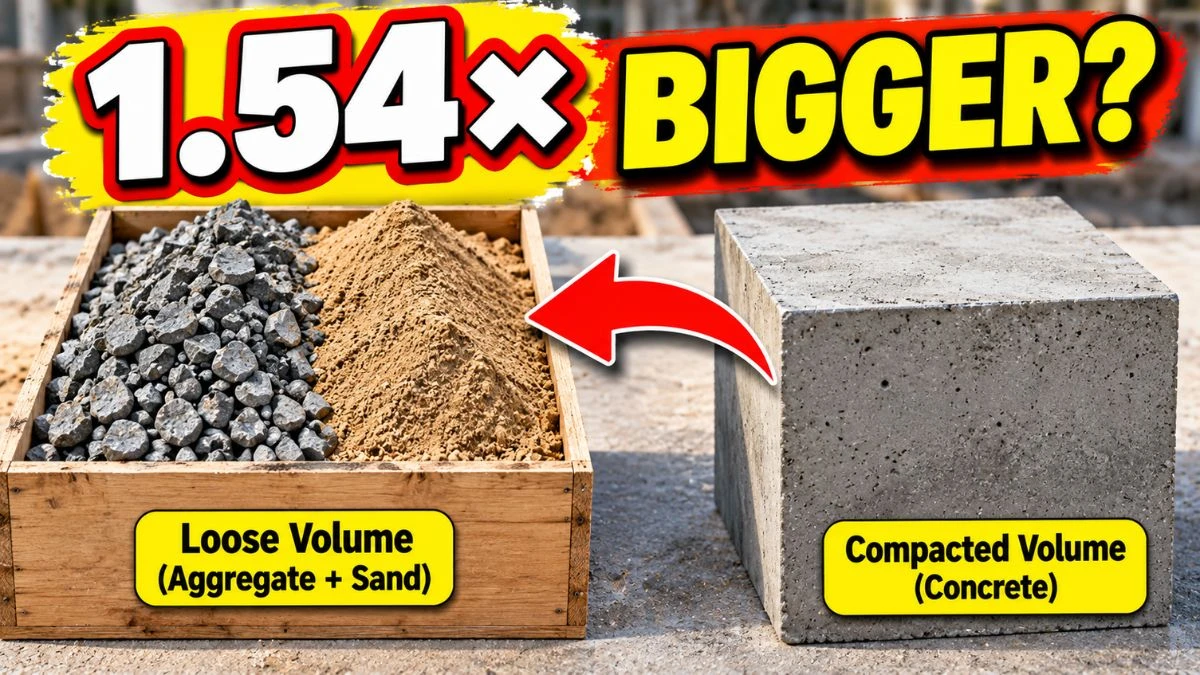
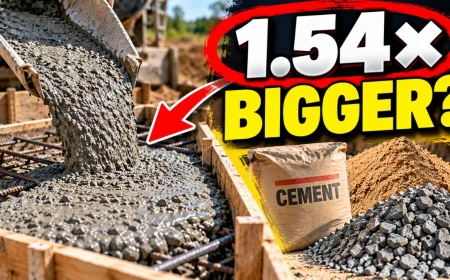
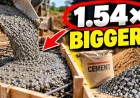
Dry volume of concrete = wet volume × 1.54.
You need this extra volume of loose cement, sand and aggregate because dry particles have air gaps that disappear once water is added and the mix is compacted. Skip the factor and you will short every material by roughly one-third.
Most beginners measure the finished size of a slab or column and stop there. That finished size is the wet volume. The dry ingredients must be ordered in a larger quantity so that, after voids collapse, you still fill the formwork completely.
What Is Dry Volume of Concrete ?
Dry volume is the total bulk volume of cement + sand + coarse aggregate measured in their loose, unmixed state.
Wet volume is the actual space the concrete will occupy after mixing, placing and compaction the volume of the shuttering or the finished structural element.
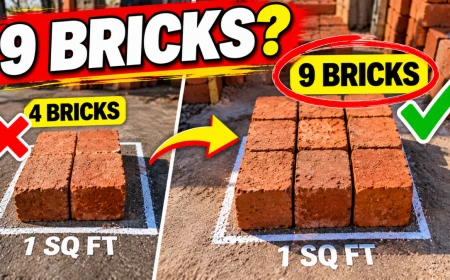
When water is added, cement paste and fine particles slide into the air pockets between the larger stones and sand grains. The mixture becomes denser and occupies less space. To end up with 1 m³ of finished concrete you therefore start with about 1.54 m³ of dry materials.
Why the Factor Is 1.54 (Not 1.5 or 1.6)
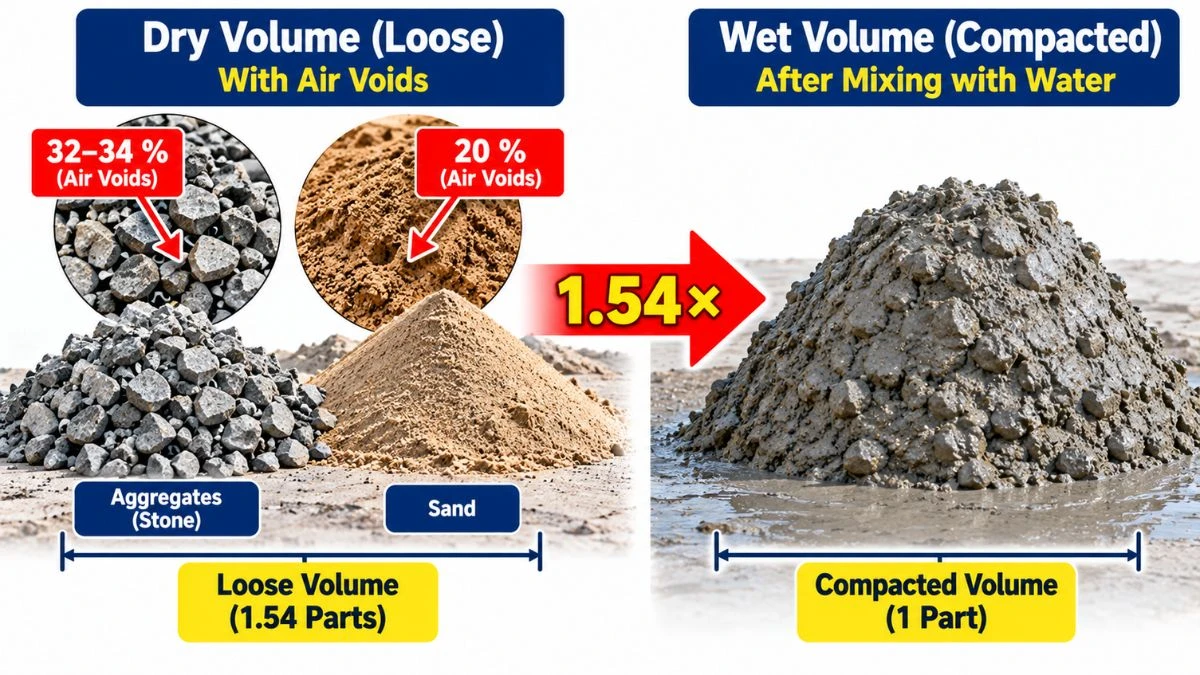
The number comes from typical void ratios found in normal concrete aggregates:
- Coarse aggregate (20 mm) contains roughly 32–34 % voids
- Fine aggregate (sand) contains roughly 20 % voids
Adding these percentages gives 52–54 %. Engineers round the combined allowance to 54 %, so the conversion factor becomes 1.54.
In practice the factor sits between 1.52 and 1.57 depending on aggregate shape and grading. Across India the industry standard for nominal-mix estimation is 1.54. Design-mix concrete (M25 and above) uses laboratory batch weights and does not rely on this volume factor.
Dry Volume Formula
Dry Volume = Wet Volume × 1.54
That is the only formula you need for ordinary volume-batched concrete.
Step-by-Step Calculation
- Measure or calculate the wet volume from drawings (Length × Width × Depth).
- Multiply by 1.54 to obtain dry volume.
- Divide the dry volume by the sum of the mix-ratio parts.
- Multiply each part by the dry volume share to get individual material volumes.
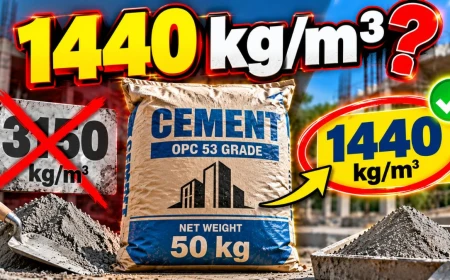
- Convert cement volume into bags (density 1440 kg/m³, one bag = 50 kg).
Comparison Table Dry Volume Factors
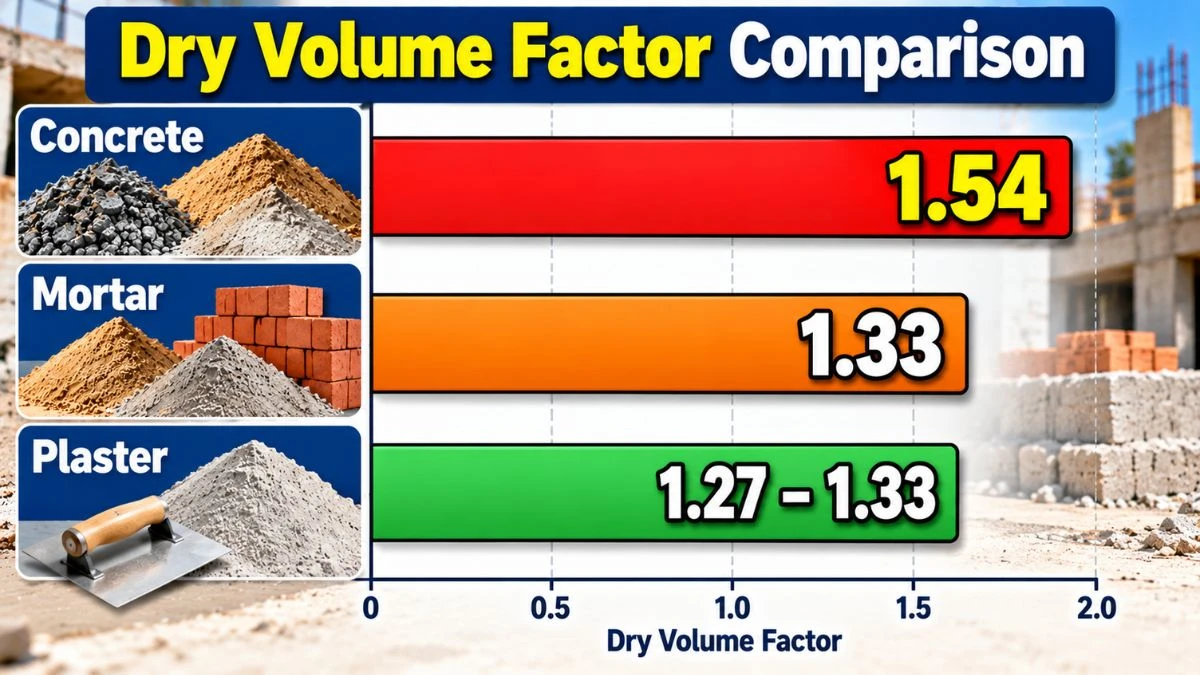
| Material / Application | Typical Factor | Reason |
|---|---|---|
| Nominal-mix concrete | 1.54 | Voids in coarse + fine aggregate |
| Cement mortar | 1.33 | Only sand voids + small wastage |
| Plaster | 1.27–1.33 + 20 % surface | Sand voids + uneven wall surface |
| Design-mix concrete | Not used | Materials given by weight per m³ |
Use the correct factor for the material you are estimating. Applying the concrete factor to mortar over-orders cement and sand.
Worked Example 1 – Floor Slab
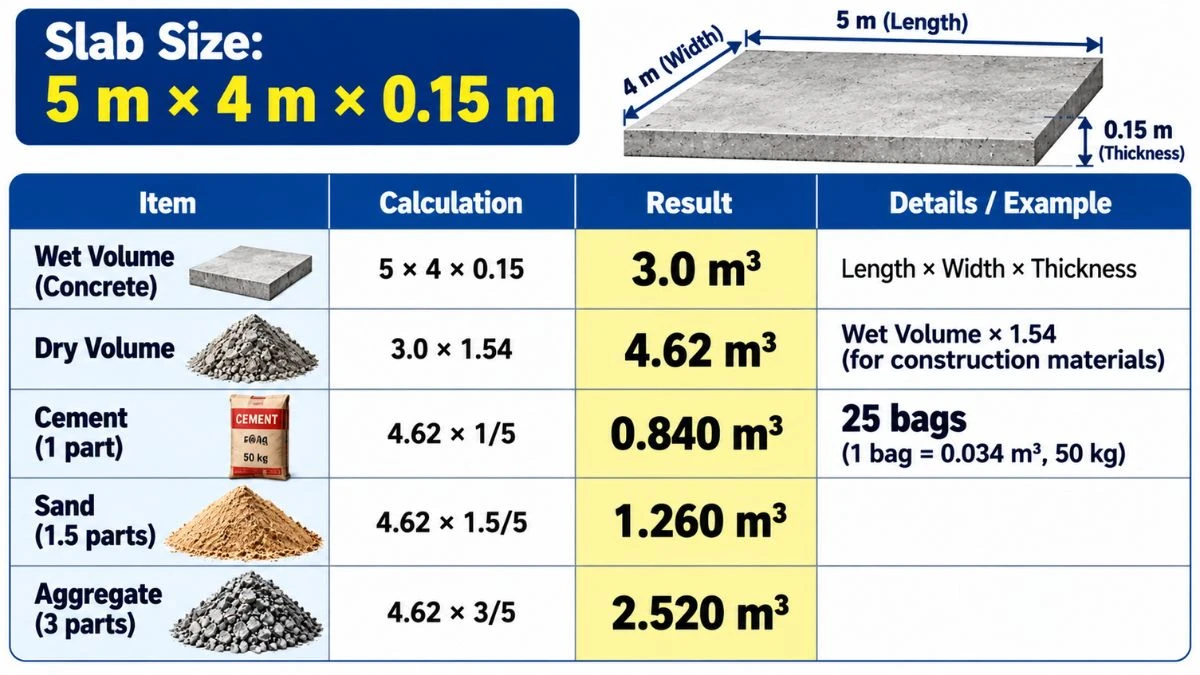
Given
- Slab size: 5 m × 4 m × 0.15 m thick
- Mix: M20 (1 : 1.5 : 3)
Step 1 – Wet volume
5 × 4 × 0.15 = 3.0 m³
Step 2 – Dry volume
3.0 × 1.54 = 4.62 m³
Step 3 – Sum of parts
1 + 1.5 + 3 = 5.5
Step 4 – Material volumes
- Cement = (1 / 5.5) × 4.62 = 0.840 m³
- Sand = (1.5 / 5.5) × 4.62 = 1.260 m³
- Aggregate = (3 / 5.5) × 4.62 = 2.520 m³
Step 5 – Cement bags
0.840 × 1440 = 1209.6 kg
1209.6 ÷ 50 = 24.19 → order 25 bags
Worked Example 2 – Column (Different Scenario)
Given
- Column size: 0.3 m × 0.45 m × 3.2 m high
- Number of columns: 4
- Mix: M25 nominal (1 : 1 : 2) for illustration
Step 1 – Wet volume of one column
0.3 × 0.45 × 3.2 = 0.432 m³
Four columns = 1.728 m³
Step 2 – Dry volume
1.728 × 1.54 = 2.661 m³
Step 3 – Sum of parts
1 + 1 + 2 = 4
Step 4 – Material volumes
- Cement = (1 / 4) × 2.661 = 0.665 m³
- Sand = (1 / 4) × 2.661 = 0.665 m³
- Aggregate = (2 / 4) × 2.661 = 1.331 m³
Step 5 – Cement bags
0.665 × 1440 = 957.6 kg
957.6 ÷ 50 = 19.15 → order 20 bags
These two examples show the same 1.54 factor applied to completely different members a horizontal slab and vertical columns.
How to Convert Wet Volume to Dry Volume on Site
- Calculate the geometric volume from the latest drawings.
- Add any over-excavation or formwork deflection if known (usually 2–5 %).
- Multiply the adjusted wet volume by 1.54.
- Split by the mix ratio.
- Round cement bags upward and keep a small contingency for spillage.
Never apply the 1.54 factor on top of ready mix bag yields. Ready mix already accounts for the finished volume.
Common Mistakes Beginners Make
- Using wet volume directly for material purchase.
- Applying 1.54 to mortar or plaster.
- Forgetting to convert cement volume into bags.
- Ignoring moisture in sand (bulking).
- Using the factor on design-mix concrete that is already specified by weight.
- Rounding down instead of up on cement bags.
Any of these errors leads to either shortage on the pour day or expensive leftover material.
Practical Tips from Site Experience
Keep a simple notebook with the 1.54 conversion written on the first page. When the site supervisor calls for “three cubes of M20”, you already know the dry quantities.
Measure aggregates by volume boxes of known size rather than by eye. Consistent box size removes another source of error.
For small residential jobs a 5 % extra allowance on top of the 1.54 calculation is usually enough. For large continuous pours keep the factor pure and order a standby transit mixer if needed.
Relation to Indian Standards
IS 456:2000 (Plain and Reinforced Concrete Code of Practice) governs grades, durability and workmanship. It does not prescribe the 1.54 factor; that factor is a long-established site estimation practice used with nominal mixes permitted under the code for grades up to M20.
CPWD Specifications also follow the same volume-to-dry conversion method for quantity estimation of nominal concrete. Always cross check the latest drawing notes and structural engineer’s mix designation before ordering.
Quick Reference Summary
- Dry volume = wet volume × 1.54 for concrete
- Dry volume = wet volume × 1.33 for mortar
- Always calculate wet volume first from dimensions
- Split dry volume by the mix-ratio sum
- Convert cement to bags using 1440 kg/m³
- Order slightly more than the calculated bags
Master this single conversion and material estimation becomes reliable even for first-time builders.
Frequently Asked Questions

Ar. Prince Badaik Is A Civil Engineering And Construction Content Creator At Civil Cost. He Shares Practical Information About Construction, Building Materials, Quantity Estimation, Costing, And Structural Engineering In A Simple And Easy To Understand Way.





Comments (0)